What Are All-On-4 Dental Implants?
If you have been researching full-arch tooth replacement, you have probably come across the question: what is All-On-4 dental implants? It is one of the most common terms people search when they are tired of loose dentures, dealing with failing teeth, or trying to understand whether a full smile can really be rebuilt with only four implants.
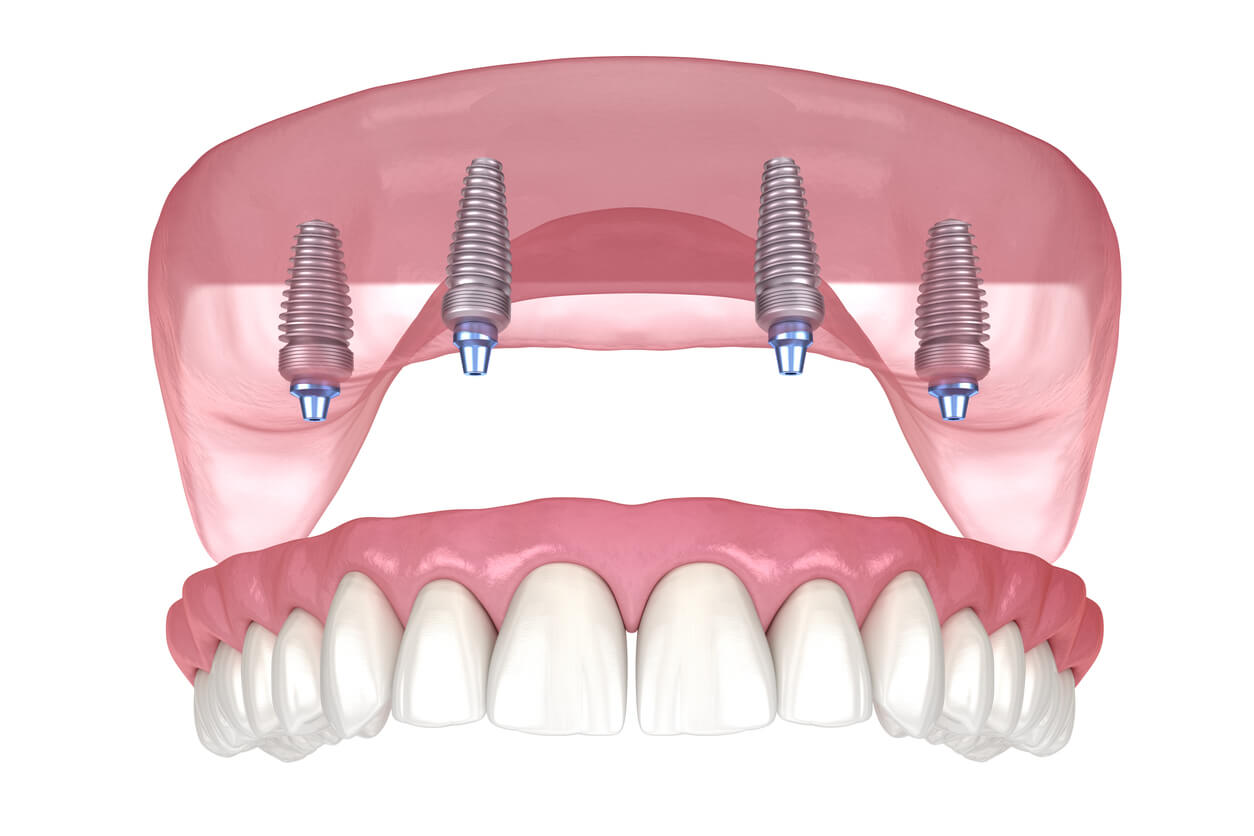
All-On-4 is a method of replacing an entire arch of teeth using 4 dental implants that support a fixed bridge. Instead of replacing every missing tooth with individual implants, this approach uses four carefully placed implant posts to anchor a full set of replacement teeth. For the right patient, it can create a stable, natural appearance and restore chewing function in a way that feels dramatically different from removable dentures.
At Elice Dental Care, this treatment fits naturally with the practice’s focus on advanced care, modern technology, and long-term oral health. For patients in Hazlet and nearby communities who want a more secure solution than traditional dentures, All-On-4 can be life-changing.
Understanding What All-On-4 Actually Means
When people ask what is All-On-4 dental implants, they are usually trying to picture the mechanics of it. The name refers to a full-arch restoration supported by four dental implants. Those four implants are placed in strategic positions in the jawbone, and then a full prosthetic bridge is attached to them.
Think of it like rebuilding a deck with four deeply anchored support posts instead of trying to prop it up with something temporary and unstable. The goal is not just to replace visible teeth. The implants act like artificial tooth root structures, helping support replacement teeth and giving the restoration more strength and stability than removable options.
This is why 4 dental implants can support an entire arch. The front implants are usually placed vertically, while the posterior implants are often angled to make the best use of available bone density and avoid sensitive anatomical structures. That angled placement is a major reason many patients with bone loss may still qualify without extensive bone grafting.
In practical terms, four implants can often support the upper jaw or lower jaw with a full set of prosthetic teeth. In some cases, patients receive treatment on both arches, creating a full mouth dental implants solution.
Why This Treatment Is Different From Traditional Dentures
Traditional dentures sit on top of the gums. They may restore appearance, but they do not replace the function of a tooth root. Over time, that matters. Without roots stimulating the jaw, bone cells are no longer triggered in the same way, and bone loss can continue. That can affect oral health, comfort, and even facial structure.
All-On-4 dental implants are different because the implants are placed into the jawbone. Once integrated, the implants act as anchors for a fixed bridge that is securely attached rather than removable. That means patients can often eat, speak, and smile with much more confidence.
For many people, the difference is immediate and emotional. Traditional dentures can slip at dinner, click while speaking, or need adhesive that feels like a workaround instead of a solution. Fixed teeth supported by 4 dental implants feel more like a return to normal life than a compromise.
This matters for more than convenience. A stable prosthetic bridge can better support bite forces, improve chewing, and help preserve facial appearance. When someone has spent years hiding their smile or avoiding certain foods, getting new teeth that stay put can feel like being handed part of their life back.
Who May Be a Candidate for All-On-4 Dental Implants
Not every patient is automatically a candidate, but many patients who assume they are out of options are surprised to learn they may still qualify. This treatment is often recommended for people with missing teeth, multiple missing teeth, failing dental work, or many teeth that are too damaged to predictably save.
It can also be a strong option for people frustrated with removable dentures, especially if they want a more permanent bridge instead of something they take in and out each day. Patients with severe bone loss may also be considered, because four dental implants are placed in a way that makes use of available bone density more efficiently than some traditional implant approaches.
That said, candidacy depends on several factors. The dentist will evaluate bone density, gum health, bite, medical history, and the condition of any remaining natural teeth. Periodontal disease, poor oral hygiene, uncontrolled health conditions, or active infection may need to be addressed first.
A personalized treatment plan is essential. Good implant dentistry is never one-size-fits-all. The right plan depends on the shape of the jaw, the amount of bone loss, the upper jaw versus lower jaw, and whether the patient needs one arch or a full mouth restoration.
How 4 Dental Implants Can Support a Full Arch
At first glance, the idea sounds almost too simple. How can 4 dental implants hold an entire bridge of replacement teeth? The answer is in strategic positioning, load distribution, and smart design.
Instead of placing individual implants for every missing tooth, the dentist uses four implants to support the entire arch. The front implants provide direct support in the denser front bone, while the posterior implants are angled backward. This helps increase contact with the available bone, reduce the need for more implants, and often avoid areas like the sinus in the upper jaw or nerve pathways in the lower jaw.
This design allows four implants to support a fixed bridge across the entire arch. In many cases, fewer implants can still deliver impressive stability because the bridge is engineered as one prosthetic unit. The final prosthesis is designed to spread bite forces across the implants rather than concentrating pressure in one area.
That is one reason All-On-4 is often discussed alongside terms like fewer implants, fixed bridge, and same day restoration. The system is built to restore many teeth efficiently while still aiming for strength, function, and a natural looking smile.
The Role of Bone Loss in Treatment Planning
Bone loss is one of the biggest concerns in full-arch cases. When natural teeth are lost, the jaw no longer receives the same stimulation through the tooth root. Over time, the bone begins to shrink. The longer teeth have been missing, the more bone loss may occur.
This is where All-On-4 can be especially useful. Because the posterior implants are angled, the dentist can often work around areas with reduced bone and use stronger sections of the jaw instead. That may reduce the need for extensive bone grafting, which can make treatment faster and less complex for some patients.
However, bone loss still matters. Severe bone loss can affect implant placement, stability, and long-term outcomes. Some patients may still need bone grafting, additional bone grafting, or even zygomatic implants in more advanced upper jaw cases. Zygomatic implants are longer implants anchored in the cheekbone and may be considered when severe bone loss limits standard placement.
A detailed scan helps evaluate bone health, available bone density, and nearby anatomical structures before surgery. This planning stage is not glamorous, but it is where a lot of success is built. In implant dentistry, the blueprint matters just as much as the build.
What the All-On-4 Process Usually Looks Like
The process begins with a consultation and imaging. The dentist examines the mouth, reviews oral health, checks for periodontal disease, and determines whether any remaining natural teeth should be removed. A clear treatment plan is then created.
If the patient is a good candidate, the surgical procedure typically involves extracting non-restorable teeth if needed and placing the four implants. This implant surgery is carefully planned so the implants are positioned for long-term support and ideal prosthetic function.
One of the biggest benefits is that many patients can receive temporary teeth the same day. This is why you often hear the phrase same day teeth or Teeth in a Day. A temporary bridge or temporary acrylic bridge may be attached after implant placement so the patient leaves with a complete smile instead of waiting months without teeth.
Later, after the healing period and wound healing are complete, the temporary restoration is replaced with the final prosthesis. That final prosthesis is stronger, more refined, and designed for long-term normal wear. The transition from temporary bridge to permanent bridge is a critical part of the process.
Temporary Teeth Versus the Final Prosthesis
It helps to understand that the first set of new teeth is not always the final one. In many All-On-4 cases, patients receive temporary teeth right after surgery, then later return for the final prosthesis.
The temporary bridge protects the implants during the healing process and gives the patient immediate function and appearance. It is a practical, same day solution, but it is not the end point. During this stage, patients are usually asked to follow instructions carefully, including eating soft foods and avoiding excess pressure while the implants integrate.
After the healing period, the final prosthesis is made. This final prosthesis may be crafted from more durable materials and adjusted for bite, comfort, and esthetics. The goal is a permanent bridge with a natural appearance that feels stable and looks like it belongs in the patient’s face, not like something generic snapped into place.
That final prosthesis is where design really matters. The shape of the teeth, the support for the lips, and the contour of the bridge all influence facial appearance and the natural looking smile patients want.
Benefits of All-On-4 Dental Implants
For the right patient, the benefits go well beyond replacing missing teeth. One major advantage is stability. Because the prosthetic teeth are securely attached to implants, patients do not have to worry about the movement common with removable dentures.
Another benefit is efficiency. Compared with placing many individual implants, 4 dental implants can often restore an entire arch using fewer implants and a shorter overall timeline. In many cases, same day temporary teeth are possible, which means patients do not spend months waiting for a visible transformation.
All-On-4 may also reduce the need for extensive bone grafting. That does not mean bone grafting is never needed, but strategic implant placement often makes treatment accessible to patients with moderate bone loss. For someone who has already been told they lack enough bone, this can open a door that seemed closed.
There is also the quality-of-life factor. A fixed bridge can improve chewing, speech, confidence, and comfort. Many patients say the emotional shift is just as important as the physical one. They stop planning their meals around what dentures can handle. They stop covering their mouth when they laugh. They stop feeling like their teeth are in charge of the room.
Potential Risks and Complications to Know About
No treatment should be discussed like magic. Dental implants have a strong success rate, but they are still a medical treatment with real risks. Patients should understand the possibility of implant failure, infection, delayed healing, or mechanical issues with the bridge.
Implant failure can happen for several reasons, including poor oral hygiene, smoking, uncontrolled periodontal disease, inadequate bone support, excessive bite forces, or medical conditions that interfere with healing. In some cases, an implant fails early during integration. In others, problems develop later because of poor maintenance or overload.
Failed dental implants are not the norm, but they are part of honest patient education. If an implant fails, the treatment plan may need to be revised. Sometimes replacement is possible. Sometimes more implants, bone grafting, or a different restorative design is needed.
Patients should also know that severe pain is not expected long-term, but some discomfort after implant surgery is normal. Following post-op instructions, attending follow-up visits, and maintaining good oral hygiene all support a smoother healing process and reduce the risk that an implant fails.
How Long All-On-4 Implants Can Last
One of the most common questions after what is All-On-4 dental implants is how long they last. The answer depends on both the implants and the bridge.
The implants themselves can last many years, and often decades, with proper care and good oral hygiene. The bridge may also last a long time, though it may eventually need repair, replacement, or maintenance depending on wear, material, and habits like grinding.
Longevity depends on proper maintenance. Even though the bridge is fixed, plaque can still build up around it. Professional cleaning, home care, and regular exams are essential. Patients need to clean under the fixed bridge, keep the gums healthy, and monitor for signs of inflammation.
This is not a set-it-and-forget-it restoration. It is a long-term investment that performs best when the patient is committed to proper care, proper maintenance, and routine dental visits.
Is All-On-4 Better Than Individual Implants?
It depends on the case. For a patient missing one or two teeth, individual implants are often the better solution. But when someone has many teeth missing, multiple missing teeth, or an entire arch of failing teeth, All-On-4 may be more efficient and practical.
Using four implants to support the entire bridge can reduce surgical complexity compared with placing multiple implants across the full arch. It can also make treatment more cost-effective than restoring every missing tooth separately. That is why full mouth dental implants are often discussed in terms of arch-based treatment rather than one implant per tooth.
Still, more implants are not always worse, and fewer implants are not automatically better. The right number depends on bone quality, bite, anatomy, and restorative goals. A thoughtful treatment plan weighs all of that carefully.
Cost, Value, and Financing Considerations
All-On-4 is a major treatment, and cost is a real part of the conversation. The price can vary based on whether one or both arches are treated, whether extractions are needed, the type of final prosthesis, and whether bone grafting or other procedures are required.
While the upfront investment is higher than traditional dentures, many patients see the long-term value in stability, comfort, and reduced dependence on adhesives or repeated denture adjustments. A securely attached fixed bridge often feels less like a temporary patch and more like a true mouth restoration.
Flexible financing options can make treatment more manageable. At a practice like Elice Dental Care, patients benefit from discussing both the clinical side and the financial side in one place, so they can make a decision that fits their goals and circumstances.
Why Experience and Planning Matter
All-On-4 is not just about placing 4 dental implants. It is about diagnosis, prosthetic design, surgical precision, and long-term follow-up. The technology matters, but judgment matters more.
A successful case depends on understanding bone loss, protecting anatomical structures, planning the angle of the posterior implants, and designing a prosthetic bridge that works with the patient’s bite and facial structure. The best results usually come from a team that sees both the surgery and the smile, not just one or the other.
At Elice Dental Care, the emphasis on advanced treatments, modern technology, and patient-focused care makes this kind of planning a natural fit. For patients in Hazlet who want clear answers and a realistic path forward, that combination matters.
Final Thoughts on What All-On-4 Dental Implants Are
So, what is All-On-4 dental implants in plain English? It is a way to replace a full arch of teeth using four strategically placed dental implants that support a fixed bridge. It is designed for people with missing teeth, failing teeth, removable dentures, or significant bone loss who want a more stable and natural-feeling solution.
For the right patient, All-On-4 can restore function, support a confident smile, and provide new teeth in a streamlined process that often includes same day temporary teeth and a later final prosthesis. It is not the right answer for everyone, but for many people, it is the first treatment that feels like a real answer instead of another compromise.
If you are considering 4 dental implants and want to know whether this approach could work for your smile, the next step is a professional evaluation. A consultation can tell you far more than hours of online research ever will, especially when your bone health, oral health, and goals are looked at together.