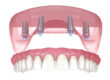
All-on-4 dental implants offer a fixed full-arch tooth replacement supported by a small number of strategically placed implants. For patients researching All-on-4 in Hazlet, NJ, understanding the process can make the decision feel less overwhelming.
This guide explains what All-on-4 treatment is, who may be a candidate, what happens during treatment, and how recovery differs from person to person.
This information is educational and does not replace an examination or individualized advice from a dentist or other qualified healthcare professional.
What Are All-on-4 Dental Implants?
All-on-4 is a full-arch restoration concept. Instead of replacing every missing tooth with a separate implant, a dentist uses four strategically positioned implants to support a connected bridge of replacement teeth. Depending on a patient’s anatomy and treatment needs, a clinician may recommend a different number or arrangement of implants.
The implants are placed in the jawbone and act somewhat like artificial tooth roots. The bridge attaches to the implants rather than resting only on the gums. A dental professional removes the restoration when necessary for maintenance; patients do not take it out each night as they would a conventional removable denture.
The rear implants may be angled to make use of available bone and provide support across the arch. This approach can sometimes reduce the need for extensive bone grafting, but it does not eliminate grafting in every case. Clinical studies describe All-on-4 as an established treatment concept with generally high patient satisfaction, while also recognizing potential biological and mechanical complications.
How Is All-on-4 Different From Traditional Dentures?
A traditional denture sits on top of the gums and can be removed for cleaning. Its fit may change as the jawbone and gums change over time. Adhesive can improve stability for some people, although movement may still occur while eating or speaking.
An All-on-4 bridge is secured to dental implants. This can provide a more stable feeling and eliminate the need to remove the teeth at night. The restoration is designed as an entire smile rather than as several individual crowns.
That added stability comes with a more involved process. Implant treatment requires surgery, a healing period, careful home hygiene, and ongoing professional maintenance. All-on-4 also involves a larger initial investment than a conventional denture.
Who May Be a Candidate for All-on-4?
All-on-4 may be considered for someone who has lost most or all teeth in one arch. It may also be an option when the remaining teeth have a poor long-term outlook and cannot predictably support other restorations.
A dentist must evaluate several factors before recommending treatment, including:
- The condition and volume of the jawbone
- Gum and oral tissue health
- The location of nerves and sinus spaces
- Existing teeth and whether any can be retained
- General health and current medications
- Smoking or nicotine use
- The ability to maintain daily oral hygiene
- Bite forces, clenching, or teeth grinding
Conditions such as uncontrolled gum disease or poorly managed systemic illness may affect healing and implant risk. That does not automatically exclude every patient, but the dental team may recommend addressing health concerns before surgery or coordinating care with the patient’s physician.
What Happens During the All-on-4 Process?
1. Consultation and diagnostic planning
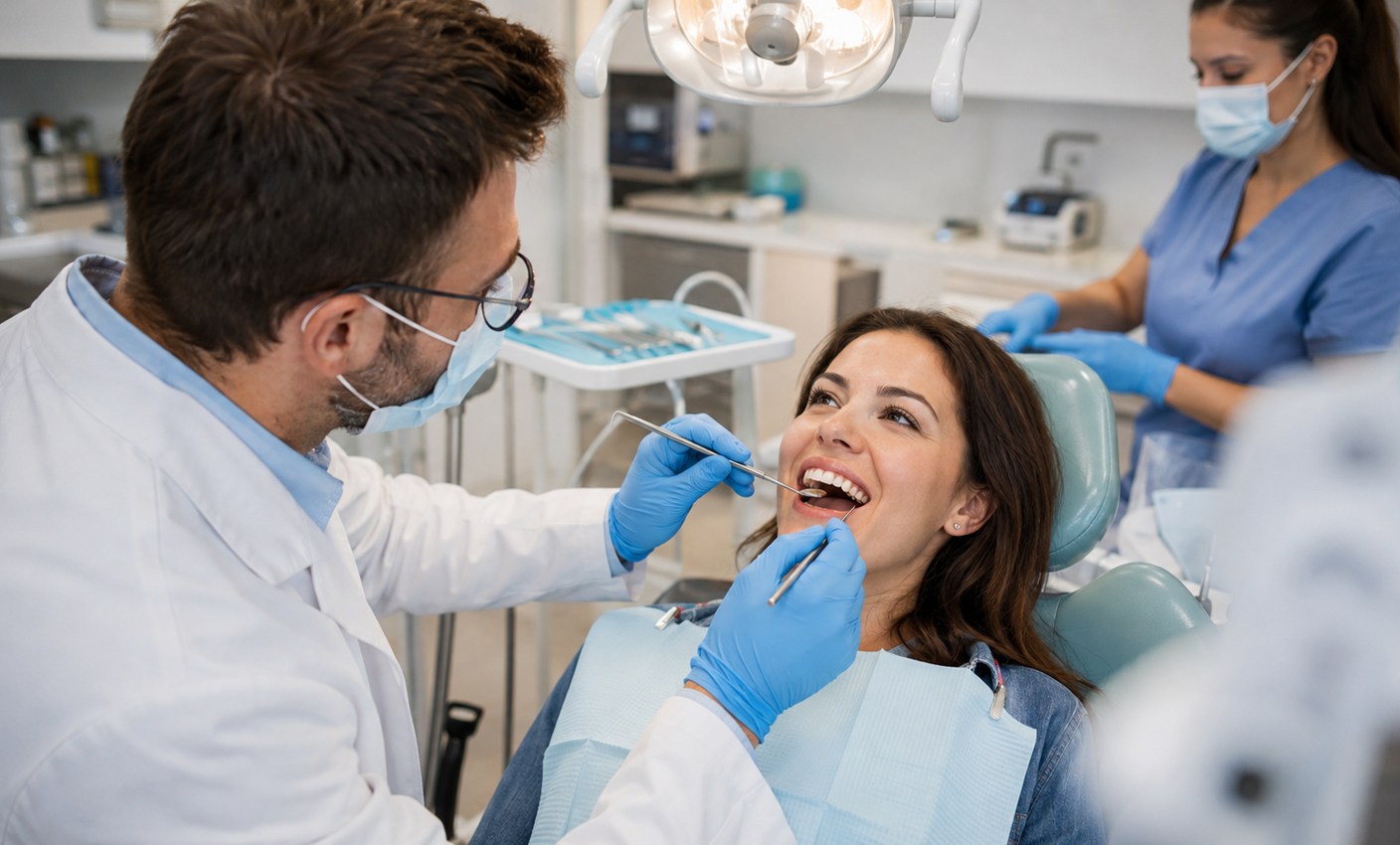
Treatment begins with a comprehensive dental examination. The dentist reviews the patient’s dental concerns, health history, medications, expectations, and previous experiences with dentures or dental work.
Digital imaging and three-dimensional scans may be used to examine bone anatomy and plan implant positions. The team also evaluates the bite, facial proportions, smile line, and available space for the new teeth.
This appointment is a good time to discuss comfort options, the expected number of visits, alternatives, fees, and what is included in the treatment estimate.
2. Preparing the mouth
Some patients need preliminary care before implant placement. This could include managing an infection, treating active gum disease, or removing teeth that cannot be preserved. Bone shaping or grafting may also be recommended based on the person’s anatomy.
The dental team should explain why each preparatory step is needed and whether it changes the treatment timeline.
3. Implant placement and a temporary restoration
During surgery, the dentist places the planned implants in the jaw. If any remaining teeth are scheduled for removal, that may occur during the same visit when clinically appropriate.
Some patients can receive a fixed temporary bridge shortly after the implants are placed. This is often called immediate loading. However, immediate teeth are not suitable in every case. The implants must have appropriate initial stability, and the patient’s bone, bite, and overall risk profile must support that approach.
A temporary bridge is designed to protect the healing implants and provide appearance and limited function. It is not yet the final restoration, so patients must follow dietary and care instructions closely.
4. Healing and osseointegration
All-on-4 recovery involves several different phases that should not be confused with one another.
- Early symptom recovery: Swelling, tenderness, bruising, and mild bleeding may occur after surgery. These symptoms should gradually improve according to the dental team’s expectations.
- Soft-tissue healing: The gums continue closing and adapting around the implant sites after the initial soreness settles.
- Osseointegration: Over the following months, the bone forms a connection with the implant surfaces. A patient may feel comfortable before this deeper biological process is complete.
- Final restoration: The permanent bridge is made only after the clinician confirms that healing and implant stability are satisfactory.
There is no single timeline that applies to everyone. In one published cohort, definitive restorations were provided after a three-month healing period, but that study protocol should not be interpreted as a promise for every patient. Bone quality, additional procedures, implant stability, health, and healing response may all affect timing.
5. Designing and placing the final bridge
Once the implants are ready, the dental team captures detailed records to create the final bridge. Tooth shape, shade, bite, speech, comfort, and facial support are evaluated before completion.
The finished bridge is attached to the implants and adjusted as needed. Follow-up appointments allow the team to check the bite, tissues, implant components, and the patient’s cleaning technique.
What Can Patients Expect During Recovery?
Patients generally receive written instructions covering medication use, oral hygiene, activity, swelling control, and food choices. A soft diet is especially important when implants are supporting a temporary bridge. Feeling able to chew does not necessarily mean the bone has finished integrating around the implants.
Recommended foods may include eggs, yogurt, soft fish, well-cooked vegetables, soup that is not excessively hot, and other foods that require minimal chewing. Hard, crunchy, chewy, or sticky foods should be avoided until the dentist says they are safe.
Patients should contact the dental office promptly if they experience worsening swelling, persistent heavy bleeding, fever, drainage, severe pain that does not respond as expected, a loose restoration, or a sudden change in the bite. Breathing or swallowing difficulty warrants urgent medical attention.
Benefits and Limitations to Consider
Potential benefits of All-on-4 treatment may include:
- A fixed alternative to removable full dentures
- Improved stability while eating and speaking
- Replacement of a complete upper or lower arch
- A restoration designed for the individual’s smile and facial features
- Fewer implants than a plan that replaces each tooth individually
Patients should also understand the limitations. Dental implants cannot be guaranteed to succeed, and restorations do not last indefinitely without care. Reported complications include infection, bleeding, wound opening, altered sensation, bone loss around an implant, and implant loss. Technical problems can include chipped restorative material or loosened or damaged screws.
Many complications can be managed when detected early, but some require additional treatment. A clear discussion of benefits, alternatives, and personal risk is an important part of informed consent.
How to Care for All-on-4 Teeth
Replacement teeth cannot develop cavities, but plaque and bacteria can still collect around the implants and beneath the bridge. The surrounding gums and bone therefore need consistent care.
A dental team may recommend a soft toothbrush, an oral irrigator, floss threaders, interdental brushes, or implant-specific cleaning tools. The exact technique depends on the bridge design and the space beneath it.
Routine professional visits remain essential. At these appointments, the team can examine the tissues, monitor bone levels when appropriate, check the bite, evaluate screws and restorative materials, and clean areas that are difficult to reach at home. Patients who grind their teeth may also need a protective appliance.
How Much Does All-on-4 Cost in Hazlet, NJ?
The cost of All-on-4 treatment varies because every plan is different. Important factors include whether one or both arches need treatment, the need for extractions or grafting, diagnostic imaging, sedation or comfort options, temporary and final restoration materials, laboratory services, and follow-up care.
Patients should request a written estimate showing what is included. It is also helpful to ask whether the quoted amount covers the temporary bridge, final bridge, preparatory procedures, follow-up visits, and future maintenance. Dental insurance may contribute to certain parts of treatment, but coverage varies by plan.
Frequently Asked Questions About All-on-4
Will a patient be without teeth during treatment?
Many patients can wear a temporary restoration during healing, but the options depend on implant stability and the treatment plan. A dentist should explain the backup plan before surgery in case immediate placement is not advisable.
Is All-on-4 painful?
Local anesthesia and, when appropriate, additional comfort options are used during surgery. Tenderness, swelling, and bruising can occur afterward. The dental team provides personalized instructions for managing discomfort and monitoring healing.
Can someone who has worn dentures for years qualify?
Possibly. Long-term denture wear can be associated with changes in jawbone volume, so three-dimensional imaging is important. Some patients have enough usable bone for implant treatment, while others need grafting or a different approach.
Are All-on-4 teeth removable?
The bridge is fixed in place for everyday use. A dental professional can remove it when necessary for repair, evaluation, or maintenance. Patients do not normally remove it themselves.
How long do All-on-4 implants last?
No clinician can promise a specific lifespan. Longevity depends on healing, health, nicotine use, hygiene, bite forces, maintenance, and other factors. The implants and the bridge are also separate components; restorative teeth or screws may need maintenance even when the implants remain stable.
Is All-on-4 the same as individual dental implants?
No. An individual implant usually replaces one tooth or supports a smaller bridge. All-on-4 uses a group of implants to support a connected full-arch restoration.
Explore All-on-4 Dental Implants in Hazlet, NJ
Choosing a full-arch tooth replacement is a significant decision. The right plan should account for health, anatomy, comfort, appearance, daily habits, and long-term maintenance—not simply the number of missing teeth.
Elice Dental Care offers All-on-4 dental implants and other implant options for patients in Hazlet, NJ. A consultation gives the dental team an opportunity to evaluate the mouth, review available options, and answer questions without assuming that one treatment is right for everyone.
Patients who are ready to learn more can request an appointment with Elice Dental Care at 226 Middle Road in Hazlet, NJ.